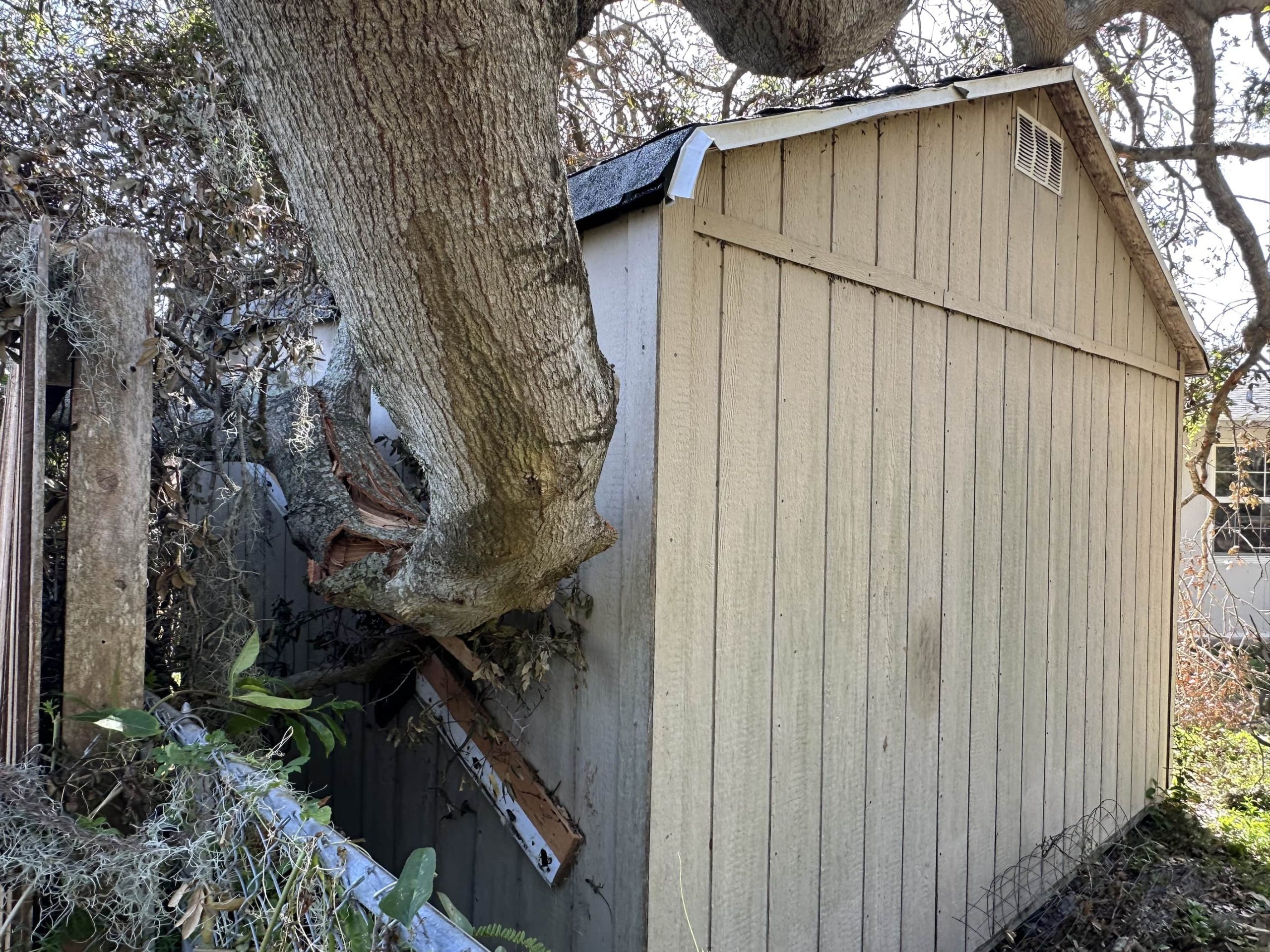

Tree trimming in Florida isn’t just about maintenance—it also involves property rights, neighbor relationships, and in some cases, local regulations. Many homeowners are surprised to learn that even though a tree may be growing into their yard, there are legal limits to what they can actually do.
Understanding these rules can help you avoid disputes and make safer decisions when maintaining trees around your property.
Can You Trim a Neighbor’s Tree in Florida?
Yes—but only up to the property line.
Florida law generally allows homeowners to trim branches or roots that extend onto their property, but there are important conditions.
You can:
- Trim branches that cross into your property
- Remove overgrowth that affects your yard or structure
However, you must be careful not to damage the overall health of the tree in the process.
What You Are Not Allowed to Do
Even though you have the right to manage your property line, there are clear limits under Florida law:
- You cannot enter your neighbor’s property without permission
- You cannot remove or destroy the tree itself if it is not fully on your land
- You cannot over-trim in a way that harms or kills the tree
These rules are in place to balance property rights while protecting tree health.
What Happens With Trees on Property Lines?
If a tree is located directly on a boundary line, ownership is often shared between both property owners.
In these cases, any major trimming or removal typically requires agreement from both sides.
This is one of the most common causes of tree-related disputes between neighbors in Florida.
Utility Companies and Tree Trimming
Utility companies are allowed to trim trees that interfere with power lines for safety and reliability reasons.
This type of trimming is part of routine maintenance to help prevent outages during storms and high winds.
Homeowners are still responsible for maintaining trees on their own property to prevent interference with utility lines.
Local Rules and Permits in Florida
Depending on where you live in Florida, tree trimming and removal may be regulated by local city or county ordinances. These rules are especially common in coastal areas, planned communities, and environmentally protected zones.
In many cases, permits may be required if you are:
- Removing large or mature trees over a certain diameter
- Working with protected tree species
- Removing trees in designated conservation or coastal zones
- Performing major tree removal in HOA-regulated communities
These requirements vary widely depending on your municipality, which is why it’s important to understand local regulations before starting any major tree work. Our team understands local ordinances and handles all necessary permissions to keep your removal fully compliant.
Why These Laws Matter for Homeowners
Even though tree laws may seem complicated, they exist to prevent disputes and protect both property owners and urban tree canopy.
Understanding your rights can help you:
- Avoid conflict with neighbors
- Stay compliant with local regulations
- Make safer decisions about tree maintenance
Trust the professionals—don’t stress, let us handle it.
If a tree is large, close to structures, or located near property lines, it’s often safest to have a professional handle trimming or removal.
This ensures the work is done safely, legally, and without damaging the tree or surrounding property.
Need help with tree trimming or removal? Call (727) 458-7885 for professional tree service in Florida.